|
The Extreme Cowboy Association (EXCA)
Rulebook
Every effort has been made to make the EXCA
Rulebook all-inclusive for rules for the 2024 EXCA
season. Should there be a situation arise that is not
covered in the 12th Edition Rulebook, EXCA Association
Policy will prevail for the entire 2024 season. The EXCA Executive Committee consisting of the Chief
Executive Office, Chief Operating Officer, and the
President determines Association Policy.
Should a rule be challenged during an event, the
event Judge(s) have the authority and are charged with
the responsibility to enforce the spirit and intent of
the rule in question.
A. EXCA is the recognized association for the
equestrian sport of Extreme Cowboy Racing. EXCA is the
only association that provides the official rules and
guidelines of the sport.
B. The EXCA recognizes only those events that
are conducted under the rules and guidelines set forth
in this rulebook.
C. Extreme Cowboy Racing is a multi-faceted
equestrian sport that requires the riders to demonstrate
both speed and horsemanship.
D. The safety of the rider and the horse are
always most important.
E. This rulebook contains the specific rules
and guidelines adopted by the Extreme Cowboy Challenge,
Inc.
F. All EXCA members shall sign the
Participation and Liability Release Agreement. Young Gun
and Youth members shall have their parent and/or legal
guardian sign their Participation and Liability
Release. See Participation and Liability Release
section for the approved form.
G. When an EXCA Division has age restrictions,
the age of the EXCA member on January 1st is the
recognized age for that entire competition year.
H. The EXCA scoring spreadsheet places a
proportionate amount of emphasis on time. In order to
receive time bonus points the course must be completed
in 8 minutes for any Division. Any course not completed
in the maximum course time allowed of 8 minutes will
receive a time bonus score of zero.
I. A horse may be ridden a maximum of 3 times per go round at an EXCA event, regardless of the number of riders. Further, a horse may only be ridden one time in each Division, with the exception of Young Guns and Youth divisions- in which case the horse can be ridden a maximum of 3 times (all rides count against the overall maximum of 3 total rides).
J. Riders may compete on multiple horses in the same Division. The rider must pay an entry fee for each horse. Each horse must be tacked and ready to compete when called.
K. Non-Pro competition shall be run prior to
Ride Smart competition. The reason is that every Ride
Smart rider has the option to compete in Non-Pro but not
every Non-Pro can compete in Ride Smart because of the
age requirement of being 55 or older.
L. The Open Division shall always be the last to
compete in an EXCA event.
1.
Definitions:
·
Rules will say “shall”.
·
Guidelines will say “should”.
·
“Compensation” shall mean receipt of, or exchange for, anything of value whether received directly, or indirectly. Prize money, prizes and awards won shall not be considered compensation.
2.
Competition Divisions:
·
Young Guns
- Minimum age of 7- maximum age of 11. Any rider
between the ages of 7-11 is eligible to compete in the
Young Guns Division. Young Guns riders are allowed to
ride “up” into the Youth Division with parental
permission.
o The same Young
Gun may ride a maximum of two horses.
o The course shall
contain 8 obstacles plus Overall Horsemanship and time
points.
o Obstacles shall
be rated 1 & 2.
·
Youth - Minimum age of 12-
maximum age of 17. Eligible Youth may ride up to Non-Pro and Open with parental approval.
o A Youth may ride
a maximum of three horses.
o The course shall
contain 13 obstacles plus overall Horsemanship and time
points.
o Obstacles shall
be rated 1 – 4.
·
Novice – 18 years & Over. The Novice Division is designed for
base level riders who have developed only the basic
riding skills, such as loping, backing and side passing,
etc. and have had little or no success competing in
other equestrian events. The Novice Division is
considered an entry level division that will allow the
rider to develop confidence and additional horsemanship
skills to allow the rider to move into the Intermediate
Division. The purpose of the Novice Division is to
provide a division that is fair to all base level
riders. Novice riders are allowed to ride "up" into higher Divisions of competition except the Pro Division. Novice riders may ride in the Open Division.
Whether a Novice rider is required to
move up to the next level shall be based on the
Executive Board’s review of the following:
1)
Data regarding how many times
a Novice rider has won their division and the number of
riders that were in the Novice division at each race
2)
Recommendations submitted by
judges and promoters regarding appropriate placement of
the Novice rider
3)
The rider’s placement in the
World Championship.
If a supported petition
is received, the Executive Board may require a Novice
rider to move up to the next division at any time during
a competition year before the EXCA World Championship. A
rider who has been moved out of the Novice Division will
automatically be qualified for the World Championship in
the Intermediate Division. A rider may petition the
Executive Board to remain in or return to the Novice
Division.
o Novice shall not
be required to jump but may be required to ride over
obstacles. The obstacle is made of logs or ground poles
of different sizes, lengths, and heights. Log height for
Novice is no more than 12 inches.
o
The Novice course shall have 10
obstacles plus overall Horsemanship and time points.
o Obstacles shall
be rated 1 - 3.
·
Intermediate
- 18 years & Over. An Intermediate rider is an
individual who is ready to move out of the Novice
division but is not yet ready to compete in the Non-Pro
division and does not receive compensation for riding or
training horses, ponies or mules. An Intermediate rider
has increased horsemanship skills such as increased
speed and confidence in their basic skills and are
prepared for the challenges of this higher level. A
rider in this division has had some competition
experience in equestrian sports and/or Extreme Cowboy
Racing. Intermediate riders are allowed to ride "up"
into higher Divisions of competition except the Pro
Division. Intermediate riders may ride in the Open
Division.
Whether an Intermediate rider is
required to move up to the next level shall be based on
the Executive Board’s review of the following:
1)
Data regarding how many times
an Intermediate rider has won their division and the
number of riders that were in the Intermediate division
at each race
2)
Recommendations submitted by
judges and promoters regarding appropriate placement of
the Intermediate rider
3)
The rider’s placement in the
World Championship.
If a supported petition
is received, the Executive Board may require an
Intermediate rider to move up to the next division at
any time during a competition year before the EXCA World
Championship. A rider who has been moved out of the
Intermediate Division will automatically be qualified
for the World Championship in the Non-Pro Division. A
rider may petition the Executive Board to remain in or
return to the Intermediate Division.
o Intermediate
shall not be required to jump any obstacle higher than
18 inches.
o
The Intermediate course shall contain
13 obstacles plus overall Horsemanship and time points.
o Obstacles shall
be rated 1 - 4.
·
Non- Pro - 12 years & Over. A Non-Pro rider is an
individual that has experience as a rider but does not
receive direct or indirect compensation for riding or training horses,
ponies or mules astride. This definition applies to all
riders age 18 and over, except a Youth rider with
parental permission. Non-Pro riders are allowed to
ride in the Open Division. Non-Pro riders may not ride
in the Pro Division.
o
The Non-Pro course shall contain 13
obstacles plus overall Horsemanship and time points.
o Obstacles shall
be rated 1 – 5.
·
Pro -
An individual is considered a
professional rider if he/she is age 18 or over and
receives direct or indirect compensation for riding or training horses,
ponies or mules astride. Pro riders may ride in the Open
Division.
o A Pro may ride
an unlimited number of horses in the Pro Division and
may also compete in the Futurity Division.
o In order for a
professional to return to a lower level of competition,
he/she must not have received direct or indirect compensation
riding or training horses, ponies or
mules for a period of three years prior to applying to
return to a lower level of competition.
o The course shall
contain 13 obstacles plus overall Horsemanship and time
points.
o Obstacles shall
be rated 1 – 6.
·
Ride Smart 55 years & Over.
The Ride Smart Division is designed for non-professional
riders age 55 and over. Ride Smart riders may ride in
the Open Division. Ride Smart riders may not ride in the
Pro Division.
o The course shall
have 13 obstacles plus overall Horsemanship and time
points.
o Obstacles shall
be rated 1 – 5.
Members registered as Non-Pro and Ride Smart may not
ride down to the Novice or Intermediate Division. But
members may renew their memberships at the lower
division, such as Intermediate.
·
Open
Division 12 Years & Over -
The Open Division is created for Youth, Novice, Intermediate, Non-Pro, Ride Smart and Pro riders.
·
Futurity Division (3 and 4-year-old horses only).
o Futurity horses
may be ridden by any rider age 12 and over.
o The Futurity
Division is a sanctioned competition at the EXCA World
Championship only.
o All horses must
be either 3 or 4 years old during the competition year
of the World Championship in which they plan to
participate.
o A futurity horse
must be nominated by August 1 to be accepted for the
EXCA World Championship competition.
o Any late
nominations will require a $100 late fee at time of
nomination.
o Horses of any
breed are accepted. Horses do not have to be registered.
Grade horses must submit a Coggins test for proof of
age.
o The Futurity fee
will be paid in installments as follows: $250.00 with
the nomination form and registration papers by August 1;
$100.00 by September 1 and $100.00 by October 1. Note:
there is a 10-day grace period provided the postmark is
no later than August 10, September 10 and October 10
each year. Any installment received after the grace
period will have a $25.00 late fee added.
o Should a
futurity horse be scratched from nomination, any fees
that have been paid are non-refundable but are
transferable.
o All exhibitors
and/or owners must be current members of EXCA.
o The nomination
form can be found on the EXCA website and can be
submitted electronically or mailed to the EXCA office.
o
Any horse nominated for the Futurity for the world show,
may only compete in sanctioned EXCA events in the Green
Horse class to remain eligible. Futurity horses cannot
be shown in any other Obstacle Association* in any
class. Local shows or other discipline events are not
considered obstacle associations. If a futurity horse is
shown in any Obstacle Association other than EXCA
sanctioned events, the horse will be ineligible to
compete at the world show.
*EXCA Affiliated clubs are exempt.
·
Green Horse Division - A Division to develop aged horses
new to EXCA & Futurity Horses
o Green Horse
Division for horses of any age
o Green horses may
be ridden by any rider age 12 or older.
o The Green Horse
Division shall have 10 obstacles plus overall
Horsemanship and time points on the spreadsheet. Points
will not be tracked by EXCA. Point fees do not apply to
this Division.
o Obstacles shall
be rated 1 - 6.
o There will NOT
be a Green Horse Division at The WORLD Finals
o The Green Horse
cannot be ridden in any other Divisions.
o Green Horse
event scores must be recorded on a separate spreadsheet
as their results do not get sent to the EXCA office and
their points are not tracked.
3.
Sanctioned Events
·
A Club shall submit an EXCA Event
Application a minimum of 30 days prior to the scheduled
event.
·
There is a $265.00 annual sanctioning
fee for each Club. The Club may host one or multiple
events during the year. The Club President or a
designated Club representative must also be a full
member of EXCA for the purpose of hosting events.
·
The Club establishes the amount of the
entry fee for each of their events. EXCA shall receive
$10.00 per entry administration fee. For example, if
you determine that you need to charge an entry fee of
$50.00 per rider, EXCA suggests that you charge $60.00
per rider to cover your expenses and pay EXCA the $10.00
per rider administration fee. It is the Club’s decision
how you use the remaining $50.00, however EXCA
recommends that after expenses, 50% of the money goes to
riders in payback or prizes for all Divisions with the
exception of the Pro Division which should receive a
higher percentage of the entry fee in payback and/or
prizes.
·
Should a Club choose to give a buckle
with the EXCA logo, or use the verbiage Extreme Cowboy
Association or Extreme Cowboy Race on the buckle the
Club must order their buckles through the EXCA
office. No Exceptions.
·
Following the EXCA Event, the Club
must send the original Excel score sheets to
turben@extremecowboyassociation.com. Send the
administration fees ($10 per rider per event) to EXCA
within 5 business days. by mail to EXCA, P.O. Box 50,
Bluff Dale, TX. 76433. All fees are to be mailed to the
EXCA office in Bluff Dale. Any score sheets not
submitted within five business days from the conclusion
of the event will be subject to a fine of $50.00 per
day.
·
Following an event, points will not be
posted until all paperwork and fees have been received
by the EXCA office.
4.
Safety
·
All riders are expected to compete
within their individual capabilities.
·
Should a rider be bucked off or fall
off, he/she may continue to compete provided he/she can
catch their horse unassisted and remount within one
minute. Should the horse leave the parameter of the
course, the rider is disqualified from that round of
competition.
·
All riders are expected to make
certain their horse is in condition to compete in the
Extreme Cowboy Challenge.
·
A rider may be disqualified if they
are unable to cross the start line within 30 seconds.
·
A rider may not be tied or attached to
their saddle in any manner.
·
Parent(s) or their designate may be on
the course when a Young Gun is competing. The purpose
of the parent or designate is for safety, not coaching
the rider through the obstacles. Due to safety,
fairness and insurance standards, it will now be illegal
for anyone to follow a rider on horseback for the
purpose of coaching, promoting, encouraging, or
assisting that rider in any division.
·
A rider may not use any device that allows communication
to or from another individual while competing.
·
Should a Young Gun, Youth or Ride
Smart rider be required to dismount, he/she may use a
mounting block or hay bale to remount. Getting a “leg
up” is not allowed.
·
The rider or the parent(s) / legal
guardian in the case of riders under the age of 18
assumes all responsibility for participation in an
Extreme Cowboy Challenge event.
5.
Extreme Cowboy Challenge Courses
·
Obstacles will be assigned a
difficulty rating of 1-6, with 1 being the easiest and 6
being the most difficult.
·
There shall be 8 obstacles for Young
Guns plus a score for “Overall Horsemanship” and a time
score.
·
There shall be 10 obstacles for the
Novice Division plus a score for “Overall Horsemanship”
and a time score.
·
All other Divisions shall have 13
obstacles, a score for “Overall Horsemanship” and a
score for time.
·
The Regional Championships should have
14 obstacles plus “Overall Horsemanship” and total
score.
·
EXCA Board of Directors will determine
the number of obstacles for the World Championship.
·
Young Guns may ride a course of only 1
& 2 rated obstacles.
·
Youth may ride a course of 1 - 4 rated
obstacles.
·
Novice may ride of a course of 1 – 3
rated obstacles.
·
Intermediate may ride a course of 1 –
4 rated obstacles
·
Non-Pro and Ride Smart may ride a
course of 1 - 5 rated obstacles.
·
Pro may ride a course of 1 – 6 rated
obstacles.
·
The Futurity Division may ride a
course of 1 – 6 rated obstacles.
·
Course obstacles should be posted one
hour prior to the event and should not be numbered.
6.
Jumps and bank jumps or drops
·
No permanent “fixed” jumps over 22”.
·
Bank jumps must be no more than 36”.
·
Drops must be no more than 54”.
7.
All obstacles must be constructed with safety for the
rider and horse in mind.
·
Example: no exposed T – posts, rebar.
8.
Extreme Cowboy Challenge Obstacles.
The obstacle rating is designated to the right of
each obstacle i.e. 1R, 2R, 3R, 4R, 5R and 6R. (R means
rating)
·
Each Division has been assigned a
specific level of difficulty for the obstacles that they
are allowed to attempt. It is the riders’ responsibility
to have a clear understanding of their own ability and
the ability they have achieved within the partnership
with their horse. Should any rider approach an obstacle
that he/she feels is beyond their ability, he/she is
expected to skip that obstacle and go to the next
obstacle.
·
Each obstacle shall have a 30 second
time limit. The time begins when the rider approaches
and begins to negotiate the obstacle. If the time limit
elapses, a whistle will be blown and the rider must move
on to the next obstacle. The judges may allow the rider
to continue provided the horse/rider team was making
substantial forward progress toward completing the
obstacle when the whistle was blown.
·
If the rider does not complete the
obstacle, points will be given or deducted based on
his/her attempt. A valid attempt may be scored from .5 –
to 2 points. The judges shall not give a 0 (zero) if a
valid attempt is made.
·
If a rider skips an obstacle and
begins the next obstacle (example: the rider completes
obstacles 1 – 4 and skips obstacle 5 and begins obstacle
6) he/she may not go back to the obstacle that was
skipped. If the rider does go back to the skipped
obstacle at any time, it will be considered “off course”
and will result in a DQ (disqualification) for that
round of competition. The rider will receive a score of
0 (zero) and a 30 second time penalty for any obstacle
that is skipped.
·
Obstacles should not be numbered.
9.
EXCA Scoring and Judging System
The following is an explanation of the EXCA
scoring system. This is how judges will be looking at
each obstacle. It is included to help riders learn how
the judges are scoring. The EXCA judging of each
obstacle will be done on a scale of 1 – 10, with 5 ½
being considered an average score. There are three
basic components to each obstacle: the Approach (+1 or
-1 point), the Obstacle itself (0 - 8 points) and the
Departure (+1 or -1 point). Although there are three
components to consider, the judge only records one
number for each obstacle score. The purpose of this is
to improve horsemanship and to allow the judge to
provide a more accurate score for each obstacle, as well
as pinpoint areas for improvement. The following is a
breakdown of the scoring system defining each phase as
well as what the judge will be looking for on each
obstacle.
THE APPROACH
Every rider will start the approach with a score
of 0, and receive quarter point increments or
deductions, based on performance. Total points for the
approach are not to exceed -1 or +1 point in this
section.
The approach to any obstacle might involve a
downward transition to a trot or walk from a lope or
even a gallop. EXCA places an emphasis on riding with
a loose rein. The judge will be scoring on what happens
when those loose reins are picked up to make a
transition or start the maneuver.
The downward transition should be smooth, soft and
balanced. The horse should be in a natural frame and
willingly respond to cues from the rider. The horse
should act as if it knows how to do the transitions, and
that they are following the cues they were taught. The
horse should not act as if being pulled down by
strength, gaping its mouth, or throwing its head up in
the air to resist to the point of notice. The horse
should not be swapping leads on the way in. The
approach should be as straight as possible.
Penalties (-1/4) point per incident
·
Incorrect lead
·
Gaping mouth
·
Not changing in the back during a lead
change (cross firing)
·
Excessive spurring
·
Hanging or balancing on your reins to
maintain balance
·
Going too fast when conditions make
footing unstable
·
Being heavy handed
·
Having excessive speed going into an
obstacle creating an unnecessary risk for the horse and
rider
·
Not keeping the horses’ hind leg
planted during a turn around
·
On a turn around, hopping and not
crossing over correctly on the front end
Awards (+1/4) point per incident
·
Starting on and maintaining the
correct lead
·
Riding on a loose rein
·
Keeping the horse’s inside leg planted
during a turn around
·
On a turn around, showing speed and
crossing over in the front without hopping
·
Big sliding stop, without pulling on
the horses’ face, causing a gaping mouth and head
elevation
·
Good speed control with lots of rate
·
Backing through an obstacle with
straightness, cadence and speed while having the horse
bridled up and broken at the poll
·
Keeping the horse collected and
correct throughout the obstacle maintaining the proper
framed body
THE OBSTACLE
The rider shall start the obstacle portion with an
average score of 5 1/2. A judge may award up to 3
additional points for the execution of the obstacle and
may deduct to a score as low as 0. The maximum score of
an obstacle shall be 8. Riders shall be awarded or
penalized using quarter point increments as shown
below.
After transitioning down to the appropriate safe
speed, the horse should act as if it has seen and done
the obstacle before and is looking to find their way
through the challenge. On the obstacle, the EXCA is
looking for a horse working on a loose or soft rein.
For example, does the horse have a catty look with his
head down hunting the obstacle? And, does the rider
know where the horses’ feet are? Ideally, the horse and
rider should look confident and even a little relaxed.
Again, horsemanship is always stressed as well as speed
with control.
Penalties (-1/4) point per incident
·
Incorrect lead
·
Gaping mouth
·
Not changing in the back during a lead
change (cross firing)
·
Excessive spurring
·
Hanging or balancing on your reins to
maintain balance
·
Going too fast when conditions make
the footing unstable
·
Being heavy handed
·
Having excessive speed going into an
obstacle without control in a way that could endanger
horse or rider
·
Not keeping the horses’ inside hind
leg planted during a turn around
·
On a turn around, hopping and not
crossing over correctly on the front end
·
Big sliding stop, pulling on the
horse’s face, causing gaping mouth and high head
Awards (+1/4) point per incident
·
Starting on and maintaining the
correct lead
·
Riding on a loose rein
·
Keeping the horses’ hind inside leg
planted during a turn around
·
On a turn around, showing correctness,
crossing over in the front without hopping
·
Good speed with lots of rate
·
Backing through an obstacle with
straightness, cadence and speed while having the horse
bridled up and broke at the poll
·
Keeping the horse collected and
correct throughout the obstacle maintaining proper
framed body
THE DEPARTURE
In the departure, the rider shall be awarded up to
1 point or deducted as much as 1 point depending on his
performance done in ¼ point increases or deductions.
Leaving an obstacle is probably a little easier to
do and judge. How the actual obstacle is accomplished
will have a lot to do with how the horse and rider
leave. If an obstacle went well, the EXCA would expect
to see a smooth exit and an efficient line being
established to the next obstacle. Like jumpers coming
down from one jump while looking and lining their horse
up for the next jump.
The upward transition should be smooth and on the
correct lead for the line of travel. Leads are really
important here but may not always happen within the
parameters of the obstacle. A lot of riders trot out
and acquire the new lead on the way to the next
obstacle. That correct or incorrect lead will be judged
in the overall horsemanship category.
Balance, cadence and confidence are what the EXCA
wants to see coming into and out of obstacles.
Smoothness up and down through the gait transitions,
similar to automatic transmissions, rather than four
speeds with popping clutches.
Penalties (-1/4) point per incident
·
Incorrect lead
·
Gaping mouth
·
Not changing in the back during a lead
change (cross firing)
·
Excessive spurring
·
Hanging or balancing on the reins to
maintain balance
·
Going too fast when conditions make
the footing unstable
·
Being heavy handed
·
Having excessive speed going into an
obstacle
·
Not keeping the horses’ hind inside
leg planted during a turn around
·
On a turn around, hopping and not
crossing over correctly on the front end
Awards (+1/4) point per incident
·
Starting on and maintaining the
correct lead
·
Riding on a loose rein
·
Keeping horses’ hind inside leg
planted during a turn around
·
On a turn around, showing speed and
crossing over in front without hopping
·
Big sliding stop, without pulling on
the horses’ face, causing gaping mouth and head
elevation
·
Good speed control with lots of rate
·
Backing through an obstacle with
straightness, cadence and speed while having the horse
bridled up and broke at the poll
·
Keeping the horse collected and
correct throughout the obstacle maintaining proper
framed body
A score of 8 or 9 indicates the horse rider team
had an outstanding Approach, Obstacle and Departure.
A perfect ride and a score of 10 should be
extremely rare.
10.
Showboating
Riders are not allowed to add any components to an
obstacle that are not required without prior approval
from the judges. Should additional components be added,
it will be classified as “showboating” and points will
be deducted from the obstacle score. If riders have a
creative idea they should consult with the judge prior
to the event. Originality and flair are encouraged when
it does not take excessive time.
11.
Submission of a Rule Change
When you have an idea for a “new rule” or a
suggestion to “modify” an existing rule, we encourage
you to let the EXCA know about your ideas. You may
submit your suggestions to your local Club and your
Regional National Advisory Board member. They will
forward your suggestions to the EXCA Office.
12.
Request for an Obstacle Approval
If you have an obstacle that you would like to use
in your event that is not currently listed, contact EXCA
by E-mail to president@extremecowboyassociation.com or
call 254.728.3082.
13.
Judges
·
Judges must be 18 or over, current
members of EXCA and are required to successfully
complete the Judge’s Certification test that is found on
the EXCA website, www.extremecowboyassociation.com. The
fee to take the 2024 test is $35.00. Each applicant
shall take the test online and submit the completed test
to president@extremecowboyassociation.com. The test
will be scored and the applicant will receive
notification of the test results. A score of 90% or
higher is required for EXCA Judge’s Certification. Upon
successful completion of the test, the Judge will
receive his/her Judge’s Card and a copy of the 2024 EXCA
Rulebook.
·
Judges’ will be rated on a scale of 1
– 5 depending on their experience and reputation. A
rating of 5 is the highest rating and a rating of 1 is
the lowest rating. All Judges’ are encouraged to attend
a Judging Seminar hosted by Craig Cameron. Details of
these seminars can be found by going to
www.craigcameron.com.
·
Should an applicant fail to
successfully complete the test, he/she may submit a fee
of $20.00 to take the test a second time.
·
Should the applicant fail to
successfully complete the test the second time, he/she
must wait a period of at least 60 days to resubmit their
application to take the test. A fee of $35.00 will be
charged to take the test and renew the process.
·
Note: As some EXCA Regions are
continuing in the growth process, they may have
difficulty finding good judges in their geographic
area. Should this occur an IAP member from that Region
shall contact the EXCA office by email to this address:
president@extremecowboyassociation.com or by mail to
request an exemption to the certification process.
·
There should be two judges for each
EXCA event. When more than one judge is used, they
should be separated by a distance of at least 25 feet.
·
A Judge should not judge a member of
his/her own family.
·
An event promoter should not judge
their own event.
·
Each judge should have a scribe to
record Judge’s scores and notes.
·
Judges shall be knowledgeable of good
horsemanship and shall judge each event based on good
horsemanship and speed with control.
·
Judges shall pay particular attention
to the rider’s balance, cadence, soft hands (loose
reins), the use of their legs and seat and speed with
control. Judges shall pay attention to the horse being
on the correct lead going into an obstacle and leaving
an obstacle as they move toward the next obstacle.
·
Judges shall have knowledge of the
different breeds and consider the breed in their
judging. This means a judge must consider the way of
going for any given breed and judge accordingly.
Example: A judge shall not score his/her preferred
breed higher than his/her less preferred breed unless
his/her preferred breed actually has a better “go” than
his/her less preferred breed. Judge’s must always keep
in mind that this event is about “getting it done
correctly”; it is not a popularity contest.
·
A judge may ask any rider to drop the
bridle after the rider completes the course. A judge may
disqualify any horse/rider team if the horse has a
bloody mouth that is determined to be caused by rough
handling.
·
The Judges may disqualify a contestant
for what they deem to be abuse of any animal or the
abuse of these rules without notice or reason given.
·
A Judge, Producer/Host shall
disqualify any contestant if it appears the contestant
has used any form of alcohol/drugs that may or may not
inhibit their ability to navigate the course. Riders
shall not consume any form of alcohol during the event
until competition is complete on the day they compete.
·
If a judge deems a horse unfit to
complete for any reason, the horse shall be disqualified
from the event.
·
If a contestant is unable to complete
the course for any reason, the contestant shall be
disqualified from that round of the event. Should the
event have additional rounds, the contestant shall be
allowed to compete in the following round(s).
·
Judges shall not confer with each
other while a rider is on course or being scored.
·
At the judge’s discretion, a
contestant may be issued a re-ride should an outside
distraction from beyond the course be so great as to
inhibit the contestant from competing. Should such a
distraction occur, the contestant must complete the
course; receive an official time and seek a re-ride from
the judges within one minute of completing the course.
If a re-ride is granted, the contestant will have the
re-ride at the end of their Division that day. The
Judge’s decision regarding a re-ride may not be
challenged in any way for any reason.
·
Judges must sign their Judge’s sheets
prior to turning them into the show office for
computation.
·
Should a contestant choose to file a
complaint about a Judge, there will be a filing fee of
$50.00. The complaint will be reviewed by the IAP from
the Region and the event Producer/Host. Should the
complaint be deemed as valid, the $50.00 will be
returned to the contestant that filed the complaint.
The IAP will send a written report of the complaint and
their findings to the EXCA office at this email address:
president@extremecowboyassociation.com.
·
A Judge may be removed by the EXCA
Board of Directors for words or actions that have been
deemed harmful to the organization.
14.
Tack
·
All tack must be traditional western
or Australian unless stated differently for a specific
event.
·
Mechanical hackamores, tie downs,
martingales, cavessons, drop nose bands and any form of
gag bit or slip bit is not allowed.
·
A bosalito will be considered a
cavesson except in a traditional two rein set up. A
bosalito will not be used with a get down rope.
·
It is acceptable to ride without a
bridle or bareback.
15.
Draw for “Order of Go”.
·
The draw for the order of go shall be
held in one of three ways:
·
It may be determined by an electronic
draw, a random draw with contestants present or by the
order of registration.
·
The draw for the order of go may not
be challenged and riders must compete in the order they
are drawn unless given specific permission to change by
the Judges.
·
Riders shall be ready to compete in
the order they are drawn. Failure to be ready in the
correct order is grounds for disqualification from that
round.
16.
Walking the Course
·
Riders will walk the course with the
Judges prior to the event. No horses are allowed on the
course during the walk through and no practicing is
allowed on the course prior to or during the event.
·
Obstacles and course rules will be
reviewed at that time.
·
Only the riders are allowed to ask
questions about any obstacle or rule on the course.
·
It is the responsibility of the
contestant to fully understand the rules, obstacles and
the order of obstacles prior to the beginning of the
event.
·
It is acceptable for event officials
to conduct one walk through for all Divisions. This
means that every obstacle to be used in competition that
day shall be explained. It is the riders’
responsibility to know which obstacles are to be
maneuvered in their Division and the sequence of these
obstacles. If one walk through is to be used for
multiple Divisions, the Producer/Host shall provide a
map to every contestant describing their Division.
17.
Tie Breaker
·
If there is a tie at the conclusion of
the Event that involves the top places, the winner is
determined by the fastest time.
18.
Timing
·
Events shall use either electronic
timers or a minimum of two stop watches for total time.
The 30 second limit for obstacle time will be done by a
separate stop watch.
·
There should be a primary timer and a
backup timer for total time.
19.
Dress Code
·
Traditional western attire or
Australian Stock attire is required.
·
Dress jeans or colored jeans are
acceptable.
·
Riders shall wear long sleeve button
up shirts.
·
Logos, with the exception of makers
mark, on shirts, jackets, pants are not allowed unless
approved by the EXCA office.
·
Shirts must be tucked in when the
rider begins competition.
·
Riders must wear riding boots with a
heel. Tennis shoes are not acceptable.
·
Riders shall wear a western style hat
or certified riding helmet. Caps are not allowed.
·
Chaps and spurs are optional.
20.
Obligations of an EXCA Member
·
Being a member of EXCA is a privilege,
not a right.
·
The EXCA Board of Directors has the
authority to direct disciplinary action or sanctions
against an individual member, judge, or EXCA Club.
·
Good sportsmanship is mandatory at all
times. Any display of poor sportsmanship is grounds for
a fine of up to $250.00, suspension or revocation of
EXCA membership. A contestant cannot be banned from an
event prior to them committing an act considered to be
detrimental to EXCA.
·
Individual members are responsible for
their own safety and the safety of their horse.
·
Examples of actions that could be
considered detrimental to the EXCA are:
o Threatening or
aggressive behavior to others during or following the
competition.
o Tampering with
another rider’s horse, tack or equipment is not allowed.
o Non-payment of
debt to EXCA or EXCA Club.
o Competing under
the influence of non-prescription drugs or alcohol.
o EXCA event
Promoters/Hosts, volunteers and staff are strictly
prohibited from consuming any form of alcohol during the
competitive portion of an event.
o Unauthorized use
of the EXCA trade mark™ or copyrighted material.
·
Failure to conduct EXCA sanctioned
events in strict compliance with EXCA rules.
21.
Fraternization
·
Riders may not fraternize with Race
Officials or EXCA staff or officials during the event or
away from the event course until the entire event is
completed.
22.
World Point Qualifying Events:
Single (WPQ) or Double Point (DWPQ)
·
WPQ (Single points) Single point administration fees for
each event.
·
DWPG (Double points) Double point administration fees
for each event.
·
No more than two WPQ or DWPQ events
may be held at one location in a single weekend.
·
Limiting the number of riders at a race shall be
advertised 30 days in advance on the EXCA web site.
·
No WPQ event will be allowed to take
place on the same weekend as the Regional Championship
within the same Region.
·
There shall be a maximum of two (2)
judges for any EXCA event.
·
When using two (2) judges, the two
judge’s scores will be totaled and divided by 2 to
determine the score given to the horse/rider team for
that go of the event.
·
Each contestant shall be ready to go
when their order of go position is called. If a
contestant is not ready to go within 30 – 60 seconds
following the previous rider’s departure from the
course, he/she may be disqualified from that round of
the competition.
23.
EXCA Cowboy Classic (Triple
Points, one administration fee)
·
Any current EXCA Affiliated Club can apply to host an
EXCA Cowboy Classic event (limit one per club per year).
·
Must be pre-approved
·
Must be in conjunction with another major event, i.e. a
State Fair
24.
EXCA State Championships (Double Points, one
administration fee)
·
State Championship dates and location
shall be approved by the EXCA.
·
Each State may have one State
Championship event.
·
State Championships shall offer all
seven divisions.
·
Any EXCA member may compete in a State
Championship.
·
A State Championship shall be a stand-alone
event.
25.
EXCA Regional Championships
(Triple Points, one administration fee)
·
Each Region shall have one Regional
Championship.
·
Regional Championships dates and
location shall be approved by the EXCA and may be held
anytime throughout the year (prior to the World
Championship).
·
Regional Championships shall offer all
seven divisions.
·
Any EXCA member may compete in the
Regional Championship.
·
A Regional Championship shall be a
stand-alone
event.
·
Each region may limit the number of
entries that can be accepted on a first come, first
serve basis.
·
Regional Championship events should
use at least one (1) Level 3 judge
·
An EXCA member must compete in the
Regional Championship in order to win the Regional
Championship. An exemption may be submitted to the EXCA
office for approval in the event of a death in the
family.
26.
EXCA
International/Provincial Championship Series (Five Times
Points, one administration fee)
·
International/Provincial Championship
dates and location shall be approved by the EXCA.
·
Each Country/Province may have one
International/Provincial Championship event.
·
International/Provincial Championships
shall offer all seven divisions.
·
Any EXCA member may compete in an
International/Provincial Championship.
·
An International/Provincial
Championship shall be a stand-alone
event.
27.
EXCA World Championship
·
The date and location of the EXCA
World Championship shall be determined by EXCA office.
·
Qualification to compete in the EXCA
World Championship requires that the horse /rider team
must rank in the top 60% of their Division in the
National Points standings.
·
A horse may be substituted for the
World competition only with a written confirmation by a
veterinarian that the horse is out for the competition
season. A substitute horse must not have won a
Division title at the EXCA World Championship within the
last three years.
28.
Horses
·
Horses that are competing in EXCA
events may be of any breed.
·
There are no age or gender
restrictions, unless specifically stated for a specific
event in which age restrictions may apply. Any event
with an age restriction must be approved by the EXCA.
·
All EXCA events should have post-race
exams by a licensed veterinarian.
·
All Regional Championships and the
World Championship should have post-race exams by a
licensed veterinarian.
29.
Welfare of the Horse
·
Every horse shall be treated with
dignity and respect.
·
Any action or treatment that is deemed
to be cruel, abusive or inhumane will result in
immediate disqualification from the sanctioned EXCA
Event.
·
Such disqualification shall be
reported by the EXCA Event host. The EXCA Event host
shall report the incident to the EXCA office within 3
business days following the EXCA Event. The EXCA Board
of Directors will review the details of the incident and
have the authority to take additional disciplinary
action as deemed necessary.
30.
Lameness
·
The EXCA judges and EXCA veterinarian
have the obligation, responsibility and authority to
disqualify any horse that is obviously lame. Lameness is
determined if:
A. The horse is
showing consistent lameness at a trot.
B. Obvious
nodding, hitching and shortened stride.
C. Minimal weight
bearing while moving or standing still.
31.
Insurance
·
The hosting landowner or designated
agent must be a member of EXCA.
· The landowner or designated agent
shall pay any fee associated with acquiring the
Certificate of Insurance.
32.
Membership Fees
·
An individual membership fee to join
the EXCA shall be as follows:
·
$650.00 for a Lifetime membership. A
Lifetime membership will also include an official EXCA
Lifetime Buckle. A current member may convert their
regular membership to a Life membership for $575.00
·
$65.00 per year for an individual
membership in Novice, Intermediate, Non-Pro, Pro,
Futurity and Ride Smart Divisions.
·
$45.00 per year for Youth and Young
Gun membership.
·
$105.00 per year for a family
membership.
·
EXCA Membership Through a Club:
Members can join EXCA through their local club. They
must pay the club directly (at a $10 discount for
Individual or Family Memberships) and the club must
submit the member’s application(s) and payment to EXCA.
The Club that has submitted the most members by the end
of the competition year will receive an award and
receive recognition by the EXCA.
·
$35.00 for a Greenhorn membership to
compete in a sanctioned EXCA event for a period of 30
days. Once the 30 days has expired, the Greenhorn
member must pay the additional $30.00 Individual
membership fee to compete in an EXCA sanctioned event.
No exceptions.
·
$25.00 for an Associate membership.
Associate members may not compete in an EXCA sanctioned
event.
·
A “Club” may be an individual EXCA
member of a group of EXCA members that host sanctioned
EXCA Events during the year.
o
The “Club” shall pay an annual
sanctioning fee of $265.00 to EXCA.
o
The “Club” may host one or
multiple EXCA Events during the year.
·
There shall be an administration fee
of $10.00 ($5 International) per contestant in each EXCA
event. This fee shall be forwarded to the EXCA within
five (5) business days following each EXCA event.
33.
Additional Membership Benefits
·
Each EXCA member shall receive an EXCA
membership card.
·
Each member shall receive “The Brave
Horse” the EXCA Electronic Newsletter with EXCA news,
EXCA member and contestant interviews, general stories
of interest and ‘Horsemanship Tips & Tales’ from EXCA
Founder, Craig Cameron.
·
Members shall receive discount prices
for merchandise purchased from the EXCA Tack & Gift Shop
located on the EXCA website.
EXCA Approved Obstacles
Archery Shoot: standing still, 3R; walking or
trotting, 4R; loping, 5R, 6R
·
The rider must pick up a bow and
blunted arrow and shoot a fixed obstacle.
·
Maximum of two arrows
·
Target must be attached to a bale of
hay, straw or another form of safety barrier.
·
The rider will have the opportunity to
familiarize themselves with the bow during the walk
through.
·
The shooting will always be toward the
center of the course, away from any observer, judge,
spectator or helper.
·
Riders are judged on smoothness and
control.
·
Points are deducted for poor
marksmanship, uncoordinated effort and/or loss of
control of the horse.
Backing 2R, 3R, 4R, 5R, 6R
·
This is a test where the contestant
must back straight or on a designated path from one
point to another.
·
The back can vary from 10’ to 60’.
·
Judges are looking for a fluid back
up, straightness, willingness and good collected
position of the horse.
·
Point deductions are given for an
unwilling horse, heavy hands, and high headedness of the
horse and loss of straightness.
Backing - Downhill 3R, 4R, 5R, 6R
·
In this test, riders are to back down
a hill or a grade.
·
A fluid back up that is straight and
on course will receive the highest score.
·
Judges are looking for straightness,
loose rein, collection and fluid back up.
·
Getting off pattern or off course are
point deductions.
·
Deductions will be taken for horses
that are unwilling and high headed.
·
Riders should work with soft hands and
loose reins.
Backing - Uphill 4R, 5R, 6R
·
In this test riders are to back up a
hill or grade.
·
A fluid back up that is straight and
on course receives the highest score.
·
Judges are looking for straightness,
loose rein, collection and fluid back up.
·
Getting off pattern or off course are
point deductions.
·
Deductions will be taken for horses
that are unwilling and high headed.
·
Riders should work with soft hands and
loose reins.
Bareback 6R Only
·
The rider removes the saddle at the
designated point on the course.
·
The rider mounts his/her horse from
the ground or with the use of a mounting block or hay
bales.
·
The rider then rides to the designated
point on the course. The horse’s gait can be at a walk,
trot or lope.
·
Highest scores are given for a smooth
mount from the ground and then maintaining good balance
and control at speed on a loose rein.
·
Point deductions will be made for
inability to remount.
·
Additional point deductions will be
made for poor balance, lack of control, tight reins and
slower speed.
Bareback Double Rider 6R Only
·
The rider removes the saddle at the
designated point on the course.
·
The rider mounts his/her horse from
the ground or with the use of a mounting block or hay
bales.
·
The rider then rides to a designated
point and picks up the double rider.
·
There should be hay bales for the
double rider to stand on to swing up to mount behind the
rider.
·
Highest scores are given for a smooth
mount from the ground and maintaining good balance and
control at speed on a loose rein. Once the double rider
is mounted, speed should be at a pace that allows the
double rider to maintain balance until it is time to
dismount. Speed with control will receive the highest
score.
·
Point deductions will be given for the
inability to remount.
·
Additional point deductions will be
made for poor balance, lack of control, tight reins,
slower speed, inability to carry the double rider and
tight reins.
Barrel Jumps 4R, 5R, 6R
·
This is a jump made out of 50-gallon
drums that are laid horizontally, side by side, on the
ground.
·
Typically, this obstacle is made with
3-4 barrels to make a wide jump.
·
Like all jumps, high points are given
for willingness, straightness, loose reins and an eye
appealing, athletic approach, jump and landing by the
horse.
·
You can make 3-4 jumps in succession
with 25-30 feet between jumps.
·
Highest scores are given for a
straight, non-hesitant approach to the barrels; the
rider maintaining good balance and position; the horse
taking the jump in the center of the obstacle with a
good crest release (hands forward) on the takeoff and
landing. Additional points will be given when the rider
maintains the correct stride between multiple jumps,
meaning he/she does not approach the jumps too short or
too long.
·
Point deductions will be taken for
hesitation, shying or refusal to take the jump(s), not
staying in the center of the jump(s), poor crest release
on takeoff or landing, failure to maintain good balance
and position and not maintaining the correct strides
between jumps.
Barrel Turns 2R, 3R, 4R, 5R, 6R
·
This is a challenge where the rider
rides around 50 gallon barrels in a traditional 3 leaf
clover pattern, 4 leaf clover pattern or a simple figure
8.
·
Highest scores are given for tight,
fluid turns, correct leads, lead changes, straightness,
speed and control.
·
Points are deducted for wide, sloppy
turns, incorrect leads, failure to change leads, lack of
straightness, lack of speed, poor control and incorrect
use of the reins
Blindfold and Lead Your Horse 5R – 6R Non-Pro and
Pro only.
·
The blindfold can be made with a fly
mask with a piece of cloth material sewn to the outside
of the fly mask, covering the horse’s field of vision.
·
The contestant is to blindfold the
horse at a designated point on the course and lead the
horse a designated distance over or through an obstacle.
·
Judges will be looking for your horse
to lead easily without hesitation.
·
This obstacle is designed to show the
horses trust in the handler.
·
This obstacle begins once the fly
mask/ blindfold is on the horse.
·
The highest scores are given to the
horse/rider team that demonstrates an athletic dismount;
the horse willingly accepts the blindfold and is
willingly led to and/or through the obstacle.
·
Points are deducted for an awkward,
sloppy dismount; the horse being hesitant or unwilling
to accept the blindfold and the horse being hesitant or
unwilling to lead to or through the obstacle.
Branding-chalk 2R, 3R, 4R, 5R, 6R
·
This is a task in the Extreme Cowboy
Challenge where the contestant steps off his horse at a
designated spot, picks up a branding iron, dips the
branding iron into the chalk and brands a tied horse on
a specific part of the body, such as the hip or
shoulder; puts the branding iron back in the chalk
bucket; remounts and rides to the next obstacle.
·
Riders are judged and scored on their
dismount; their approach to the horse that is to be
branded; application of the brand; how well the
contestant’s horse stood ground tied and their remount.
·
High points are given for an athletic
dismount, a quiet approach to the horse that is to be
branded, smooth application of the brand; the rider’s
horse remaining ground tied and a smooth re-mount and
departure.
·
Points will be deducted for an
uncoordinated dismount; a sloppy, fast approach that
spooks the horse to be branded; sloppy application of
the brand; the rider’s horse not staying ground tied and
an uncoordinated remount and departure.
Bridge 2R, 3R, 4R, 5R, 6R
·
The bridge may be slightly elevated,
not more than 24” in height.
·
The highest scores will go to the
horse and rider that crosses at a safe speed, without
hesitation, the horse working with a low head and a
loose rein.
·
Point deductions will be made for
balking, spooking, refusing to go on the bridge or not
crossing the full length of the bridge. Additional
points will be taken for crossing the bridge at an
unsafe speed; the horses head being too high and heavy
hands.
Broken Jump 4R, 5R, 6R
·
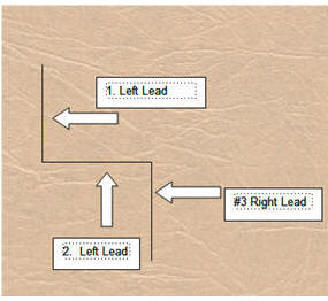
This obstacle is constructed by
setting up a series of 3 jumps that are connected, with
two of the jumps set in a vertical pattern that has a
connecting horizontal jump.
See diagram:
·
This obstacle can be approached on
either a left or right lead and should be maneuvered
making certain there is at least one lead change as the
horse/rider team jumps each of the 3 jumps.
·
Points are given for approaching and
departing the obstacle on the correct lead at a lope on
a loose rein, going over each jump cleanly and changing
leads when required.
·
Points are deducted for approaching
and departing from the obstacle on the incorrect lead,
failure to go over the jumps cleanly and tight reins
Cache Hoist 3R, 4R, 5R, 6R
·
This obstacle is constructed by tying
a lariat to the end of an object to lift off the
ground. It simulates hoisting your food or belongings
off the ground at a campsite.
·
The horse approaches the hoist and the
rider reaches and takes the rope and begins to back up
or side pass away from the object that is tied to the
lariat, lifting the object up from the ground. The
hoist rope can be tied off, leaving the object suspended
in mid-air, or can be let back down to the ground.
Carry Saddlebags 3R, 4R, 5R
·
The horse/rider team rides to a
designated point on the course to pick up the saddle
bags. The saddle bags should have loose items in them
such as tin cans with BB’s or some other type of item
that creates noise.
·
The rider then carries the saddle bags
to the designated drop off point.
·
Highest scores will be given for a
smooth, unhesitant approach to pick up the saddle bags
including a good stop on the horse’s hindquarters; a
smooth, balanced ride with loose reins to the drop off
point; a good stop at the drop off point and placing the
saddle bags in the designated spot.
·
Point deductions will be given for the
horse balking, spooking or hesitating when approaching
the saddle bags; a rough stop on the front end or shying
at the saddle bags. Points will also be deducted for
tight reins, an unbalanced ride and rough stop when
approaching the drop off point.
Circles Big and Small - Slow and Fast 2R, 3R, 4R,
5R, 6R
·
This is a test where the rider rides
perfect designated circles, first at a slow speed and
then at a fast speed.
·
Horse should depart on the correct
lead and remain on the correct lead.
·
The rider may be required to change
speeds at any point in the pattern.
·
You may choose to have the rider turn
across the middle of the circle to reverse direction
asking their horse for a flying lead change or simple
lead change.
·
Flying lead changes will score higher
than a simple lead change (when a horse drops to a trot
to change leads).
·
Points are deducted for no speed
changes, dropping gait, high headedness, tight reins and
the rider leaning in the circles.
Climb Windmill - Ring Bell 3R, 4R, 5R, 6R
·
The rider dismounts at the wind mill
or similar object such as a ladder leaning against a
barn in a safe manner and may either ground tie or tie
his/her horse to an appropriate object.
·
The rider then climbs the ladder on
the wind mill and rings the bell. The rider comes down
the ladder and remounts his/her horse and moves on to
the next obstacle.
·
Higher scores are given for a smooth
stop at the wind mill; an athletic, coordinated climb up
and down the ladder; the horse remains ground tied or
stands quiet if tied and the rider has a smooth remount
for departure to the next obstacle.
·
Point deductions will be taken for a
sloppy or difficult climb up or down the ladder; the
horse not remaining ground tied or not standing quietly
if tied and a sloppy remount.
Cow Sort 3R, 4R, 5R, 6R
·
Horse and rider team must sort a
numbered cow or cow of a certain color from the herd.
·
Depending on the construction of the
pen, the rider may be required to open and close the
gate when entering and exiting the pen. The pen may be
a single pen or a double pen with a second interior
gate.
·
The highest scores will go to the
rider that opens and closes the entry gate in a smooth
manner (if required); enters the herd in a quiet,
controlled manner, sorts the designated cow within the
time allowed and opens and closes the exit gate in a
smooth manner.
·
Point deductions will be taken for the
inability or awkward opening and closing the entry gate
(if required); entering the herd in a fast, rough
manner; DISTURBING THE HERD; not sorting the designated
cow within the time allowed and the inability to open
and close the exit gate in a smooth manner.
Cowboy Curtain 2R, 3R, 4R, 5R, 6R
·
Rider must be mounted.
·
Curtain may be constructed of rope or
plastic strips and should be 7’-10’ wide and high enough
for a safe entry.
·
The highest scores will be given for a
non-hesitant approach to the obstacle; loping through
the obstacle with good balance on a loose rein and
moving smoothly on to the next obstacle.
·
Point deductions will be taken for
balking or hesitating on the approach; jumping or
leaping through the obstacle; poor balance, lack of
control and tight reins.
Daisy Chain 2R, 3R, 4R, 5R, 6R
·
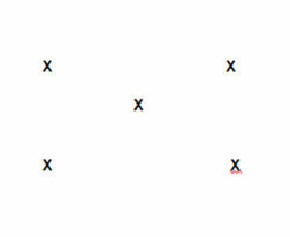
The Daisy Chain can be constructed by
using 5 pole bending poles or 5 cones. It is
constructed by placing 4 of the cones or poles in a
square with a space of 21’ – 28’ between each corner. A
cone or pole is placed in the center of the square to
serve as the hub of the obstacle. The hub should also
be spaced 21’ – 28’ from each corner cone or pole.
·
The rider enters the obstacle by
approaching the hub and going around the hub on a left
lead and then approaches a corner cone or pole to
maneuver in a figure 8 pattern which requires a change
to the right lead, returning to the hub changing to a
left lead and so on. Each corner cone or pole is
included in the obstacle.
·
All turns around the center cone or
pole are on a left lead and all turns around the corner
cones or poles are on a right lead.
·
Points will be awarded for being on
the correct lead, flying lead changes and loose reins.
·
Points will be deducted for dropping
out of a lope, incorrect leads, simple lead changes and
tight reins.
See diagram below:
Dead Fall 2R, 3R, 4R, 5R, 6R
·
The Dead Fall obstacle represents
rough country found in a forest or on a ranch, made up
of limbs, branches, logs or natural debris.
·
The dead fall crossing shall be at
least 15’ and no further than 120’ in length.
·
Depending on the density of the dead
fall, the rider may take his/her horse through the dead
fall crossing at a walk or trot.
·
Highest scores will be given for the
horse being sure footed; low head and crossing the dead
fall in a safe manner.
·
Points will be deducted for reckless
speed, tripping, high headedness and poor control.
Doubling (turning) into the Fence 3R, 4R, 5R, 6R
·
This is a performance move turning
into the fence (between 2 marks on the fence)
approximately 60’ apart.
·
In this maneuver there may be as few
as two turns and as many as five turns.
·
Unlike the roll back, this is a moving
turn similar to turning a cow into the fence in a
working cow horse event.
·
The horse and rider are judged on
lightness, athleticism and willingness.
·
The horse should turn, pivot and drive
off the hind quarters.
·
When working at a lope, the horse
should change leads with each turn.
·
The highest scores are given to the
horse/rider team for a smooth turn into the fence; a
strong, athletic pivot and driving the horse off the
hindquarters as they move to the point for the next turn
or next obstacle. This maneuver should be done with
loose reins. Highest scores are given to the horse
/rider team working at a lope.
·
Point deductions will be taken for
awkward, rough turns into the fence; sloppy or
uncoordinated pivot, not driving the horse forward off
the hindquarters and tight reins.
Flag Race 2R, 3R, 4R, 5R, 6R
·
Rider picks up a small hand-held flag
planted in a bucket of sand sitting on a 55-gallon drum
or barrel and takes the flag to the next barrel and
plants the flag into the bucket of sand sitting on the
barrel.
·
The highest scores will be given to
the horse/rider team that has a smooth approach to the
flag and can pick up the flag without stopping the
horse; carry the flag to the next barrel with speed,
balance and control on a loose rein and successfully
deposit the flag in the sand bucket on the barrel.
·
Point deductions will be taken from
the horse/rider team that has difficulty approaching the
flag due to lack of control, balking or spooking; the
inability to pick up or deposit the flag in a smooth,
athletic manner; lack of balance; inability to travel in
a straight line, lack of speed and tight reins.
Flares and Smoke 3R, 4R, 5R, 6R
·
Flares may be on the ground and horse
and rider must ride by or through the flare smoke.
·
Highest scores will be given for a
quiet, smooth approach and ride to or through the flare
and / or smoke on a loose rein.
·
Points will be deducted for balking,
shying or a hesitant approach; lack of balance and tight
reins.
Free Ride 2R, 3R, 4R, 5R, 6R
·
The Free Ride is an exciting and
important part of every Extreme Cowboy Challenge.
·
The Free Ride can be done to music
over the PA system to add excitement.
·
In the Free Ride, a rider has the
opportunity to clearly show speed with control.
·
The Free Ride can take place at the
beginning, middle, or end of a race.
·
The Free Ride can be around the
perimeter of the entire race course or go through the
middle or even weave around obstacles or through the
course.
·
The Free Ride can entail obstacles
such as jumps, barrel turns or whatever creative
obstacle that does not slow down this exciting portion
of the race.
·
High points are given for soft hands,
loose reins, speed and control.
·
Point deductions are made for lack of
straightness, tight reins, lack of speed and poor
control.
Ground Tie 2R, 3R, 4R, 5R, 6R
·
Ground tie may be done in several
ways: Dismount and leave your horse and walk a
prescribed distance from your horse or walk around a
chalk circle with your horse inside the circle.
·
High scores are given for a smooth,
athletic dismount; walking away from or around the horse
in a quiet manner with the horse standing quietly
without moving or walking away; re-approaching the horse
and remounting in a smooth manner with the horse
standing quietly.
·
Point deductions are taken for a
sloppy, hurried dismount; hurriedly walking away from or
around the horse; the horse moving or walking away;
re-approaching the horse in a hurried fashion; sloppy or
awkward re-mount and/or the horse moving during the
re-mount.
Hay Carry 3R, 4R, 5R, 6R
·
The hay carry is constructed by
placing two cones on the ground approximately 10’
apart. Three or four bales of hay are stacked next to
one of the cones. The object of this obstacle is to
dismount and ground tie your horse while you move the
bales of hay to the second cone and stack them neatly.
·
The highest scores will be given for
the horse staying quiet and ground tied without moving
away while you move and re-stack the hay bales.
·
Points will be deducted for the horse
not staying ground tied and for the inability to move or
re-stack the hay neatly.
Hay Maze 2R, 3R, 4R, 5R, 6R
·
This obstacle is constructed with
round bales if available. If round bales are not
available, square bales may be used. The hay bales
should simulate a tunnel of or winding trail for the
horse/rider team to negotiate.
·
Depending on the Division that is
competing, the horse/rider team may go at a walk, trot
or lope.
·
Highest scores are given for a smooth,
balanced ride through the maze at a lope on a loose
rein.
·
Point deductions are given for lack of
balance or control, tight reins, slow pace, or failure
to negotiate the maze.
Hay Ring 3R, 4R, 5R, 6R
·
The ring must be a bull ring which
means it is a minimum of 6 feet.
·
Rider must ride upright through the
ring.
·
You may use 2 or 3 rings to make a
longer or tunnel like obstacle.
·
Rings shall have a dirt path through
them to assure safe footing for the horse.
·
Rings shall be secured on each side to
prevent them from rolling or moving.
·
The highest scores will be given to
the horse/rider team that approaches the ring without
slowing down, balking or spooking; moves through the
ring smoothly in a relaxed manner on a loose rein.
·
Point deductions will be taken for
stopping or slowing down as the horse/rider team
approaches the ring; balking, spooking or refusing to go
through the ring; lack of balance, lack of control and
tight reins.
Key Hole 2R, 3R, 4R, 5R, 6R
·
Set four cones to form a square or use
chalk to form a keyhole configuration. The square or
keyhole should be large enough for the horse to enter
the square at speed, stop and do a nice rollback to exit
the square and go to the next obstacle.
·
High points will be given for a smooth
entry, smooth stop with loose reins and a good rollback
on the hindquarters.
·
Point deductions will be given for
entering the square or keyhole too slow, tight reins,
rough stop and a sloppy or poor rollback.
Lead Across a Water Obstacle 3R, 4R, 5R, 6R
·
Rider must dismount and lead their
horse across the water.
·
Water may be belly to mid chest deep
on the horse for leading across the water.
·
The highest scores are given for the
horse that willingly follows the rider into the water
and leads across the water on a loose rein or lead rope
if the rider chooses to not lead by the reins.
Additionally, higher scores are given to the rider that
maintains their balance and a steady consistent pace and
exits the water smoothly.
·
Point deductions are given if the
horse refuses or balks at being led into the water.
Additional point deductions are taken for tight reins or
lead rope; the rider losing their balance and/or pulling
and tugging on their horse in the water and/or having
difficulty exiting the water.
Leading Horse - from ground 2R, 3R, 4R, 5R, 6R
·
Lead you horse at a walk, trot or lope
from Point A to Point B as designated on the course.
·
Leading your horse with a loose lead
rope will be given a higher score than pulling on your
horse to follow you.
·
The horse should lead at the rate the
handler is traveling, with the horse’s head at the
handler’s shoulder, on a loose lead.
Log Crossing 2R, 3R, 4R, 5R, 6R
·
A natural obstacle made of logs or
ground poles of different sizes, lengths and heights.
Log height for Novice no more than 12 inches.
·
Example: Four logs, 30’ apart that
rider crosses in succession.
·
Highest score goes to the rider that
is riding and/ or jumping with a loose rein, crossing
the center of the logs in a straight line in total
control.
·
This can be done at a walk, trot or
lope, with a controlled lope receiving the highest
score.
·
Point deductions will be taken for
refusing, ducking, diving, hitting the jump, tight reins
and the rider bouncing or becoming unseated.
Log Pull 3R, 4R, 5R, 6R
·
The lariat shall be securely attached
to the log.
·
The lariat and log will be placed in
the same location for each rider to pick to begin the
log pull.
·
The average length of the log pull
should be 30’.
·
The rider will take the lariat and
either dally to the horn and pull the log or can pull
the log by hand.
·
The log pull may be with either a
heavy or light weight log.
·
The highest score goes to the horse
that does not spook, goes straight, has good cadence,
loose reins and the log should never touch the horses’
hind legs.
·
Points will be taken for spooking,
going crooked, lack of cadence, tight reins or the log
touching the horses’ hind legs.
Mail Box 2R, 3R, 4R, 5R, 6R
·
While mounted the rider shall open and
close the mailbox.
·
Another option is to open the mailbox,
remove the “mail”, close the mailbox and carry the
“mail” to a designated deposit point.
·
The horse should stand quietly in a
perfect position for the rider to access the mailbox.
·
For additional points the rider may
side pass to the mailbox and do a rollback when they
leave the mailbox.
·
Points will be deducted for the horse
not standing quietly for the rider to access the
mailbox, failure to close the mailbox, a sloppy
departure or rollback as they leave the mailbox and lack
of control.
Moguls 2R, 3R, 4R, 5R, 6R
·
Moguls may be constructed of dirt or
sand.
·
Moguls may be of varying degrees of
difficulty, being different sizes and heights.
·
The rider must ride his/her horse over
each mogul.
·
The highest points will be given to
the rider that keeps the horse moving forward at an even
pace, centered on the moguls with loose reins and
perfect control.
·
Points will be deducted for lack of
forward movement, moving to the side or off the mogul,
lack of control, lack of balance and /or tight reins.
Move Golf Ball from one cone to another cone 2R,
3R, 4R, 5R, 6R
·
A golf ball is placed on the top of a
cone.
·
Cones vary in size and height
depending on the degree of difficulty.
·
The lower the cone the further the
rider must lean down, thus a more difficult task.
·
Cones for Young Guns should be tall.
·
While on your horse, lean over and
pick up the golf ball from the cone.
·
Ride to the second cone and lean over
to place the ball on the second cone.
·
The highest score will be for an
athletic lean down by the rider and the horse standing
perfectly still; picking the ball up from the first cone
and placing the ball on the second cone.
·
Point will be deducted for an
uncoordinated lean down; the horse moving during the
lean down; inability to pick up the ball from the first
cone; inability to place the ball on the second cone or
drops the ball.
Narrow Bridge 2R, 3R, 4R, 5R, 6R
·
A narrow bridge should not be less
than 12" nor more
than 24” wide and 15’ – 20’ long.
·
The bridge may be slightly elevated,
not more than 24” in height.
·
The highest scores will go to the
horse and rider that crosses at a safe speed, without
hesitation, the horse working with a low head and a
loose rein.
·
Point deductions will be made for
balking, spooking, refusing to go on the bridge or not
crossing the full length of the bridge. Additional
points will be taken for crossing the bridge at an
unsafe speed; the horses head being too high and heavy
hands.
Open and Close Gate (rope gate or regular gate)
2R, 3R, 4R, 5R, 6R
·
The rider is judged on approach,
opening and closing the gate without bumping or hitting
the gate or gate post in a smooth, controlled manner.
·
A higher score will go to the rider
whose hand does not come off the gate in the opening and
closing process.
·
The rider must unlatch and re-latch
the gate as instructed by the judges for this particular
obstacle.
·
Points will be deducted for hesitation
on the approach to the gate, the rider’s hand losing
contact with gate or failure to open and close the gate.
Pallet Pull (Controlled) 4R, 5R, 6R
·
This is a pulling challenge designed
to show complete control of the horse.
·
Example: A 3’ X 4’ pallet is loaded
with approximately 350 pounds of small square hay
bales. A 5-gallon bucket of water is placed on top of
the stacked hay.
·
A lariat rope is tied to the middle of
the pallet in a good pulling position.
·
The rider must then pull the stacked
hay and bucket of water the allotted distance, 15’ –
20’.
·
The highest score is given to the
rider that can pull the pallet smooth, straight and easy
without spilling the bucket of water.
·
Points will be deducted for poor
control while pulling the pallet and spilling the water.
Pick Up Horses Feet 2R, 3R, 4R, 5R, 6R
·
This a task that is performed while on
the course at a designated area where the contestant
stops, dismounts and is required to pick up 1,2,3 or all
4 feet.
·
Contestant then remounts and rides to
the next obstacle.
·
Riders are judged on their stop;
dismount; handling of the feet and how well the horse
stands for the procedure and remount.
·
Highest scores are given for a smooth
stop and athletic dismount; the horse standing still and
allowing the rider to pick up the feet with very little
effort; the riders picking up the feet in an appropriate
manner; a smooth re-mount and departure.
·
Points will be deducted for a rough
stop; sloppy dismount; the horse moving away to avoid
having the feet picked up; the rider having difficulty
or being unable to pick up the horse’s feet; a sloppy
re-mount and/or departure.
Pin Wheel 2R, 3R, 4R, 5R, 6R
·
This obstacle is constructed by using
a cone and 4 poles that are at least 12’ in length. The
cone is used as the hub of the obstacle with each pole
extending from the cone to form a circle with 4 equal
quarters.
·
The rider must maneuver the obstacle
by riding in a circle around the cone and over each
pole.
·
Points will be awarded for riding the
obstacle at a lope, being on the correct lead; cleanly
riding over the poles on a loose rein.
·
Points will be deducted for walking or
trotting, being on the incorrect lead, not riding over
the poles cleanly and having tight reins.
Pistol-Shoot Balloons (black powder mounted
shooting blanks) 4R, 5R, 6R
Rifle – Shoot Balloons (black powder mounted
shooting blanks) 5R, 6R
·
A ground handler will hand the pistol
to the rider or the rider will pick up the pistol from a
safe, stationary location.
·
The rider will return the pistol to
the handler or to the stationary location upon
completion of the obstacle.
·
The rider will have the opportunity to
familiarize themselves with the pistol during the walk
through.
·
Riders will shoot from one to three
balloons in a straight or triangular pattern.
·
The shooting shall always be toward
the center of the course away from any observer, judge,
spectators or helpers.
·
The highest scores will be given to
the horse and rider team that works smoothly, without
the horse spooking and breaks all the balloon targets.
·
Point deductions will be made for
horses spooking at the gun fire and failure to break the
balloons.
·
If the pistol misfires, the rider will
not receive a point deduction.
Pivot Pole Swing 3R, 4R, 5R, 6R
·
Materials needed: 10 or 12-foot pole
(PVC) and 2 or 3 barrels
·
The pole is lying across two barrels
that are approximately 8 – 10 feet apart.
·
The rider must pick up one end of the
pole and walk or side pass around the other barrel,
leaving the other end of the pole in contact with the
pivot barrel.
Pony or Lead a Second Horse 3R, 4R, 5R, 6R
·
Rider will pick up a second horse from
a handler or untie the horse from a stationary object.
·
This exchange shall be the same for
each rider.
·
If the pony horses must be rested, the
replacement horses must be of the same temperament and
caliber.
·
The rider is judged on how well he/she
handles and leads the pony horse.
·
The rider may be required to lead the
pony horse over a predetermined course of obstacles.
Example: Logs, ravine or water.
·
The highest score is given to the
rider that handles this task in a smooth consistent
manner.
·
Scores will be lower for the pony
horse getting loose, the rider’s horse kicking at the
pony horse or handling the pony horse in a rough manner.
Put on Easy Boots and Then Ride 3R, 4R, 5R, 6R
·
This is a challenge where the rider
stops at a designated spot on the course; dismounts and
puts on a pair of Easy Boots (protective boots) on the
front feet and rides until they reach the designated
area where the boots are removed.
·
The highest scores are given for a
smooth dismount; the horse standing still while the Easy
Boots are put on the front feet; a smooth re-mount and
departure to the next obstacle.
·
Point deductions are given for an
uncoordinated dismount; the horse moving while the rider
is putting the Easy Boots on the front feet AND; an
awkward re-mount and departure and the horse not
accepting the boots in the riding portion.
Ravine Ride (Deep or Shallow) 3R, 4R, 5R, 6R
·
A great obstacle where a natural or
manmade ravine or gulley puts the horse and rider to the
test.
·
The ravine or gulley can be deep or
shallow, long or short.
·
The entry and exit points can be
challenging but must be negotiable.
·
The ravine can have brush, debris,
logs or water depending on the Division of the riders
competing.
·
Riders will be judged on position and
the horses’ willingness, loose rein, smoothness and
awareness of their feet.
·
Point deductions will be given for
lack of control or the inability to negotiate the entire
ravine.
Ride a Straight Line 2R, 3R, 4R, 5R, 6R
·
This is a challenge for the rider to
ride a straight line; the longer the distance the
better.
·
The straight line can be marked or
unmarked. The rider should ride a straight line at the
lope to a designated location such as a barrel; turn
around the barrel and return in a straight line.
·
Highest points are given for riding at
a lope without breaking gait in a perfectly straight
line; the horse being straight from poll to tail; loose
reins; smooth turn and unity between horse and rider.
·
Points are deducted for not riding at
a lope, breaking gait, not riding in a straight line;
tight reins and lack of unity between horse and rider.
Ride Through Round Bales 2R, 3R, 4R, 5R, 6R
·
This is an obstacle where large round
bales are set up in a way that makes a narrow path
between them that can be straight or curved that the
contestant must negotiate his horse through.
·
This obstacle can be short or long
depending on the availability of round bales.
·
Highest points are given for a clean,
smooth and non-hesitant entry into the obstacle and a
smooth, quick run through the round bales with loose
reins and a willing attitude.
·
Point deductions will be made for the
horse hesitating or shying from entering the obstacle;
hesitating or spooking while completing the obstacle;
failure to move through the obstacle at a consistent
pace with a willing attitude on a loose rein.
Road Flashers and/or Road Signs 3R, 4R, 5R, 6R
·
An obstacle designed to show the
confidence of the horse in the rider to ride through or
past the flashing lights.
·
The lights can be set up in lanes for
the rider to ride past or through.
·
The lights can be ground level or be
hung rider height.
·
The high score is given to the horse
and rider that goes through without hesitation showing
the willing and brave horse.
·
Points are deducted if the horse
hesitates or is not willing to approach or go through
the obstacle; the rider having poor balance, lack of
control and tight reins.
Roll backs 3R, 4R, 5R, 6R
·
The Roll back should be performed at a
lope.
·
The judges are looking for a stop and
180 degree turn on the hindquarters going back the other
direction the horse and rider came from.
·
The first step of the lope after the
roll back should be on the new or correct lead.
·
Deductions will be made for stopping
on the front end, jerking the horse to a stop, horses
head high in the air, turning on the front end, trotting
off or no lead change going the opposite direction.
·
The highest score will be a smooth
sliding stop on the hindquarters with a pivot on the
hindquarters going back the opposite direction. The
first step of the lope should be on the correct lead.
·
There shall be 3-5 roll backs to
exhibit this maneuver.
Rope Livestock (cattle or horses) 4R, 5R, 6R
·
The livestock should be kept, handled
and worked in a safe corral.
·
Water and feed should be available to
the livestock.
·
The contestant will be judged on
entering the corral or a designated helper can let the
participant into the corral.
·
At the point of entry the contestant
will be told which livestock he/she is to rope.
·
The rope shall have a breakaway Honda,
unless otherwise determined. The course will provide a
rope or the contestant may use their own provided the
rope has a break away Honda, unless otherwise
determined.
·
The contestant will be allowed to
throw two (2) loops. If he/she misses the second loop
he/she must move to the next obstacle. If the 30-second
whistle sounds prior to the second loop he/ she must
move to the next obstacle.
·
The highest score is given for quiet
handling of the horse and livestock and throwing an
expert loop.
·
Deductions are given for rough
handling of the horse, or livestock and missing with the
rope.
Serpentine Through a Pattern (built with panels,
cones, ground poles or any object to create an S or
snake-like pattern) 2R, 3R, 4R, 5R, 6R
·
The serpentine can be built in a
variety of configurations that require the horse/rider
team to continually change directions and make lead
changes when at a lope.
·
The highest scores will be given for
good balance, good control, proper lead changes and a
loose rein.
·
Point deductions will be taken for
breaking gait, poor lead changes or lack of lead
changes, lack of balance and control and tight reins.
Side Pass (logs, ground poles, or panels) 2R, 3R,
4R, 5R, 6R
·
This is an obstacle where the rider
side passes through panels or over logs or designated
obstacles.
·
Logs of different diameters may be
used in a straight or angled pattern.
·
Examples: Two (2) 10’ poles are put on
the ground in a 90-degree angle.
·
The object for the rider is to side
pass in one direction with the horses’ feet straddling
the log with the front feet on one side of the log and
the hind feet on the other side of the log. The rider
side passes and makes the 90-degree turn while holding
this position.
·
The high score is given to the rider
that maintains cadence, straightness and correctness.
·
Points are deducted for stepping over
or on the log, lack of straightness and, lack of cadence
and poor side pass.
Slicker or Tarp Carry 3R, 4R, 5R, 6R
·
The contestant will pick up a slicker
or tarp from a handler or stationary location and wear
or carry the slicker or tarp and drop it at a designated
spot.
·
The highest score is given to the
rider that handles the slicker or tarp with absolutely
no spook or fear from the horse and travels from point A
to point B with speed and control
·
Points shall be deducted if the rider
drops or loses the object or if the horse spooks or
shy’s from said object.
Spearing Stationary Rings 2R, 3R, 4R, 5R, 6R
·
This is a challenge obstacle where the
riders spear a stationary ring made from 4” PVC pipe
with a wooden pole (broom stick handle) from a moving
horse.
·
The 4” PVC rings are placed vertically
on the top of a piece of 4”- 6” PVC pipe which is
secured into the top of a 6’ wooden post which is
planted in the ground.
·
There should be three (3) rings in a
row, which are 20’ TO 50’feet apart.
·
The rider should pick up the wooden
spear (broom handle) out of a barrel then attempt to
spear the three rings that are placed 20’ TO 50’ apart.
If the rider misses or drops a ring they must ride to
the next ring.
·
The rider rides to the drop point and
drops the spear and rings in a barrel, then moves to the
next obstacle.
·
The highest score is given to the
rider that picks up the spear, travels at a good pace
and collects and deposits all 3 rings and spear in the
deposit barrel.
·
Point deductions are taken from the
rider that misses or drops the rings or spear and lacks
smoothness and control.
Spin 3R, 4R, 5R
·
This is a performance move where the
rider will step into a designated area or spin box which
can be made from poles or logs and the box should be
approximately 12 x 12 feet square
·
The rider must do reining horse spins
inside the box. Four spins to the right followed by
four spins to the left.
·
Highest score is given to the horse
and rider team that exhibits flat and fast spins each
direction with the front end of the horse moving around
a stationary hind leg. The spin should start and end
with the rider facing the same direction.
·
Point deductions will be given for
horses that are hopping and are unable to maintain a
stationary hind quarter or performs a poor, sloppy
spin.
·
Slow correct spins are not scored as
high as fast correct spins.
·
Slow and correct spins are scored
higher than fast, incorrect spins.
Stand Up in Saddle, Hit Tennis Ball 6R
·
This is a control exercise where the
rider goes to a designated area, perhaps inside the spin
box, and stops his horse. The rider must then attempt
to stand up on his horse and touch a dangling object,
such as a tennis ball, which is suspended by rope or
string from an overhead or tree limb. Depending on the
degree of difficulty, the object should be 10-11 feet
high.
·
Highest score is given to the rider
whose horse stands perfectly quiet, never moving, and
the rider exhibits total control and balance and stands
completely up on his horse in a confident manner and
touches the suspended object.
·
Point deductions are given for a
moving horse, loss of balance or if a rider jumps or
falls from his horse. A rider can re-mount within the
allotted time limit to try again.
Step-Down or Up
One step-down or up Rating depends on
height. 12” - 2R, 24” - 3R, 36” or higher - 5R, 6R
·
A one step is a solid bank that the
horse negotiates up or a drop that the horse negotiates
down.
·
Riders are to ride up or down
smoothly, balanced, in control and on a loose rein.
·
Point deductions are given for a balk,
refusals, jerking on the horse’s mouth and loss of seat
or balance.
Two step-down or up Rating depends on height. 12”
- 2R, 24” - 3R, 36” or higher - 5R, 6R
·
A two step is two banks or drops in a
row.
·
Riders are to ride up or down
smoothly, balanced, in control and on a loose rein.
·
Point deductions are given for a balk,
refusals, jerking on the horse’s mouth and loss of seat
or balance.
·
High scores are given to the
horse/rider team that approaches the obstacle and goes
up or down the entire obstacle without hesitation on a
loose rein with good balance and control.
·
Point deductions are given for
balking, tight reins, Poor balance and lack of control.
Three step-down or up. Rating depends on height.
12” - 2R, 24” - 3R, 36” or higher - 5R, 6R
·
A three step is three banks or drops
in a row.
·
Riders are to ride up or down
smoothly, balanced, in control and on a loose rein.
·
Point deductions are given for a balk,
refusals, jerking on the horse’s mouth and loss of seat
or balance.
·
High scores are given to the
horse/rider team that approaches the obstacle without
hesitation and maneuvers the entire obstacle on a loose
rein with good balance and/or control.
·
Point deductions are made for balking,
tight reins and poor balance and/or control.
Stops 2R, 3R, 4R, 5R, 6R
·
This is a performance maneuver where
the rider can exhibit a reining or sliding stop. The
stops occur at a designated area on the course. These
stops can be in natural ground or a groomed area for
better stops.
·
Highest points will be given to the
rider who stops from a lope or lope, exhibiting a
straight sliding stop on the hind quarters. Judges will
be looking for a controlled stop with a soft touch.
·
Point deductions are given for yanking
or ripping the horse in the ground, high headedness by
the horse, a gaping mouth, loss of straightness, or
stopping on the front end.
Tarp (Drag, Carry, Ride over) 3R, 4R, 5R, 6R
·
This is a moving obstacle, where a
rider picks up a tarp from a handler or stationary
location and is required to drag a tarp by hand or rope
behind his horse to a designated deposit area. The tarp
should be dragged 50 to 75 yards.
·
The 50 to 75 yards can be in a
straight line or a figure 8 pattern and/or end with a
backup.
·
Highest scores are given to the rider
whose horse stays cool, calm and straight during this
exercise, exhibiting no fear and travels at the speed
the rider requests.
·
Point deductions occur for spooky
horse, loss of control, running sideways and turning
loose and losing the tarp. Judges are looking for the
brave horse.
Teeter-Totter Bridge 2R, 3R, 4R, 5R, 6R
·
This is a bridge crossing where the
bridge is laid on top of a small pole or log causing the
bridge to move at some point during the crossing. This
obstacle should be an 8 to 10-foot wooden bridge
·
Highest scores are given to the rider
whose horse crosses this moving obstacle in a straight
methodical manner with no spooking. The horse must
travel the complete length of the bridge.
·
Point deductions for hesitation,
spooking or coming off the bridge prematurely.
Trailer Load 3R, 4R, 5R, 6R
·
The trailer will be placed along the
course, many times being the last obstacle in the race.
Although not a requirement, a favorite is a simple
stock-style trailer. For safety the trailer should be
hitched to a truck. There are different ways a rider may
load his horse in the trailer. A rider may dismount and
lead or send his horse into the trailer. Remember,
safety to horse and rider is paramount and the judges
are taking this into consideration with each style of
trailer load. Depending on the requirement of each race,
usually the trailer door is open on approach and the
rider is required to close the trailer door after
loading making certain the trailer is road ready.
·
The highest score goes to the rider
whose horse loads willingly, smoothly, without
hesitation. The rider that chooses to ride into the
trailer or swing off must do so in an athletic, smooth
and safe manner to receive a high score. Horses should
stand still and quiet in the trailer.
·
Scoring deductions will come from hard
to load, hesitating horses. Deductions will also come
from unsafe or sloppy attempts by the rider to ride in
or swing off. Points will also be taken for horses that
turn around, unload or attempt to unload.
Trash Ride (trash between two panels) 2R, 3R, 4R,
5R, 6R
·
This obstacle is created by making a
10’ wide alley with portable panels approximately 12-24’
long. The alley is then littered with trash such as feed
sacks, cans, paper bags, plastic bottles simulating
trash on the highway or messy campsites. DO NOT use any
litter that is unsafe for the horse or rider. The rider
must then negotiate his/her horse through this littered
alley.
·
The highest score is given to horses
that do not hesitate and travel the alley with their
heads down on a loose rein, looking where they are
going.
·
Point deductions are taken from horses
that spook or shy away or once in the alley, they run
through out of fear.
Tunnel 2R, 3R, 4R, 5R, 6R
·
This is an object that can be created
with tarps, panels, hay bales etc. to create a tunnel
effect.
·
The tunnel can be long or short but
must be safe in construction, height and width. Common
sense in constructing the tunnel is paramount. The
tunnel should simulate a tight canyon, ravine or
concrete road culvert.
·
The rider must ride his/her horse
forward through the tunnel.
·
If the horse is hesitating, backing
through the tunnel will receive a lower score.
·
The highest scores are given to riders
whose horses move through the tunnel without hesitation
in a smooth manner at the speed the rider wishes to go.
Riders may go fast as long as they have control.
·
Deductions will be taken for
hesitation, lack of control and inability to negotiate
the tunnel.
Water Box 2R, 3R, 4R, 5R, 6R
·
When a natural water challenge is
unavailable, creating a water challenge by digging out a
low spot on the course and lining it with a plastic tarp
(if necessary) and filling it with water is a good
substitute to create a water hazard. The boundary of
the box can be made with posts or railroad ties which
help to hold the plastic tarp in place.
·
Avoid making the water box a hole. The
water box should have a safe sloping bank for entry and
exit.
·
High scores are given for smooth entry
and exit with the rider staying centered on a loose
rein.
·
Point deductions are given for the
horse balking, jumping, leaping, tight reins and an
uncentered or unbalanced rider.
Water Carry 4R, 5R, 6R
·
Carry a full 5-gallon bucket of water
from the pickup station and empty the bucket into a
water tank or container.
·
The rider picks up a full 5-gallon
bucket of water that is placed on top of a 55-gallon
drum. The rider must then carry the bucket of water
approximately 30’ and pour the water into a water tank
·
High points are earned by the rider
who carries the water quietly, without spilling
excessive amounts of water, in a straight line to the
water tank. At the water tank the rider is able to pour
the water with two hands in an exaggerated fashion,
while his horse is standing still on loose reins or
dropped reins exhibiting no fear.
·
Point deductions-the rider is unable
to pick up the water, spills the water, or drops the
water bucket. Deductions are also given for traveling
crooked with the water. Poor scores result from
inability to control the horse when pouring the water
into the water tank.
Water Crossing (shallow or deep) 3R, 4R, 5R, 6R
·
Water crossings can be as shallow as 6
inches or so deep that it requires the horse to swim
which would be for our professional riders. A good
average depth for a challenging water crossing would be
3 feet.
·
Water crossings should start shallow
and go deep and end shallow so the horse and rider have
a safe entry and exit.
·
High points go to the horse and rider
team that enters willingly, travels straight, without
fear, and exits with no problem. Crossings that are
made with speed but maintain safety and control can
receive higher scores.
·
Point reductions will be assessed for
hesitating horses, horses that leap into the water from
fear, attempt to exit the water prematurely or nearly
unseat or unseat their riders.
Waterfall 4R, 5R, 6R
·
This is an obstacle made with a volume
of water flowing or falling to create a waterfall
effect.
·
Depending on the design of the
obstacle, the rider must ride near or through the
falling water.
·
High points are given for a spook less
approach and a non-hesitant ride near or through the
obstacle.
·
Point deductions are given for the
horse hesitating or spooking on the approach to the
obstacle; shying or hesitant ride through the obstacle;
poor balance and tight reins.
Water Sprinkler 3R, 4R, 5R, 6R
·
Water sprinklers may be positioned
where the water goes up, down or sideways to create a
challenging obstacle.
·
Ride your horse around the perimeter
of the active sprinkler
·
Ride your horse through the water
coming from the sprinkler.
·
The highest scores will be given for
passing through the water without hesitation on a loose
rein with a willing attitude.
·
Deductions will be given for balking
or failure to move through the water. Rough handling of
the horse is always a deduction on any and all
obstacles.
Zigzag 2R, 3R, 4R, 5R, 6R
·
This is a pattern that tests the
handiness of the horse.
·
This obstacle can be set up with cones
or poles.
·
The obstacle is set up in a zigzag
configuration where the rider maneuvers around each cone
or pole.
·
Judges are looking for speed, control
and for the horse to change leads each time he changes
direction.
·
Higher scores are given for
straightness, speed, loose reins and correct lead
changes.
·
Points are deducted for lack of speed,
lack of control, failure to change leads and tight
reins.
|